
Our conference will be held at the Mercure Paris Porte de Versailles Expo. This chic and modern venue offers great facilities and ample space for networking and presentation featuring spacious auditoriums and breakout rooms.
36-38 Rue Du Moulin 92170 Vanves France
Explore nearby hotels and convenient transportation
options for a hassle-free journey.

Our venue is conveniently located near major transportation hubs. Discover the best travel options to ensure a smooth journey.
The nearest airport to Mercure Paris Porte de Versailles Expo (36–38 Rue du Moulin, 92170 Vanves) is Paris Orly Airport, approximately 15 km away and around a 20–30 minute drive from the venue, depending on traffic
Multiple bus and train lines connect directly to the conference location.
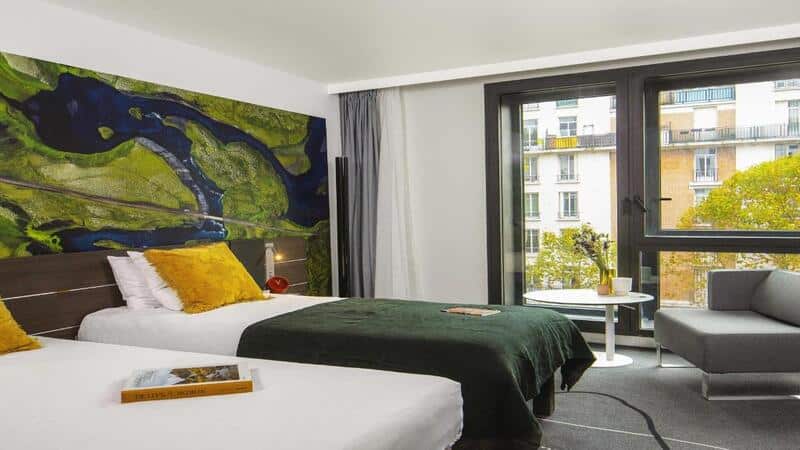
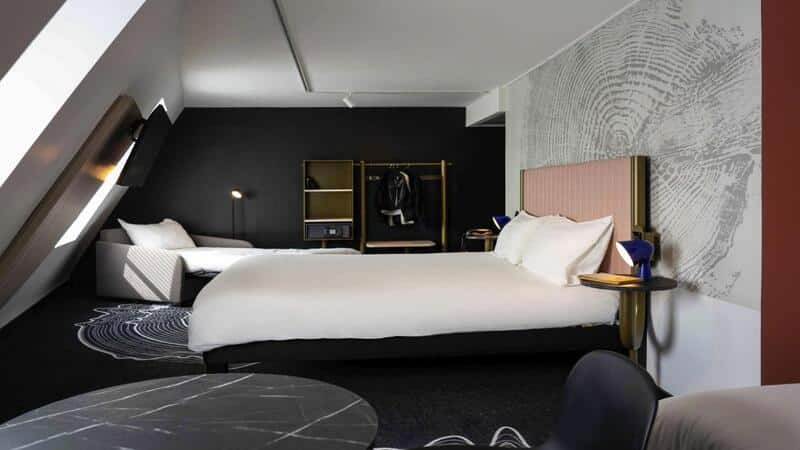
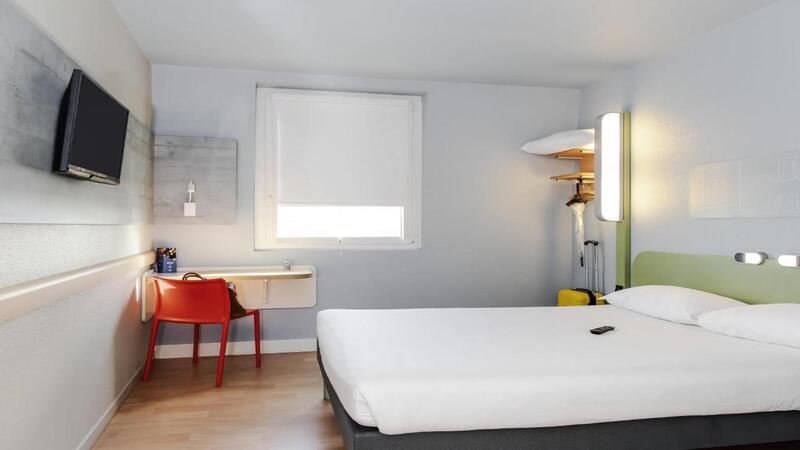
A variety of hotels are available within walking distance or a short commute. Options range from budget-friendly accommodations to premium hotels for those seeking additional comfort.

Address: 37 Av. Hoche, 75008 Paris, France
Phone: +33 1 42 99 88 00
Address: 4 Av. de la Prte de la Plaine, 75015 Paris, France
Phone: +33 1 88 33 23 60
Address: 15 Avenue Jean Jaurès, 92130 Issy-les-Moulineaux, France
Phone: +33 1 40 94 40 40
Address: 1 Rue de la Convention, 75015 Paris, France
Phone: +33 1 56 56 27 27
Find answers to common questions about the venue and accommodation for our conference.
There are several hotels nearby, ranging from budget to luxury options. We recommend booking early to secure the best rates. Check our accommodation section for a list of recommended accommodations.
The nearest airport to Mercure Paris Porte de Versailles Expo (36–38 Rue du Moulin, 92170 Vanves) is Paris Orly Airport, approximately 15 km away and around a 20–30 minute drive from the venue, depending on traffic
Yes. The venue is well connected by bus, train, and metro lines, making it easy to reach from anywhere in the city.
We recommend booking flights and accommodations as early as possible. Check local travel advisories and plan for potential delays. Don't forget to explore the city while you're here!
The Euro is the official currency of France, and of most European Union member states, excluding the Czech Republic, among others. The Euro, symbolized by a “€,” has been in public circulation since January 2002. The franc, the former official currency of France, is no longer accepted, however, you may see that some price tags in France give the price both in Euro and in francs, to help those who still think in terms of francs.
The French health care system is generally recognized as offering one of the best, services of public health care in the world. Above all, it is a system that works, provides universal cover, and is a system that is strongly defended by virtually everyone in France.
A cornerstone of France’s revered healthcare system, the pharmacy is included in the basic amenities you will find in every medium-sized town and even in some relatively small villages. In fact, there are some 23,000 pharmacies across the whole country.
Passports must be valid for at least three months beyond your planned date of departure from the Schengen area.
You will need to apply for a short-stay visa. Regulations and types of visas vary according to the French territory you intend to visit:
For European territory (mainland France), France complies with Schengen regulations related to the Schengen area, and issues a short-stay Uniform Schengen visa; For non-European territories (French overseas territories), France issues a short-stay national visa; For stays longer than 90 days, you will need to apply for a long-stay national visa.
Power plugs in France have the particularity of being male and female at the same time. Electrical outlets in France usually deliver power at 220-240 volts. It is much stronger than most North American sockets, which usually deliver 110-120 V. Plugging 110V hairdryer to a 240V French socket may result in ruining the device or worse, starting a fire.
Paris has two airports, Roissy Charles de Gaulle (CDG) to the north and Orly (ORY) to the south. If you arrive in Paris by air, public transport will get you quickly and cheaply into central Paris. Unless you can squeeze five passengers into a taxi, it will certainly be cheaper.
There are seven major train stations in Paris stations that go beyond the Ile de France region.
Gare du Nord. The busiest railway station in Europe and the hub for trains arriving and departing Paris on the Eurostar. …
Gare de l’Est. …
Gare d’Austerlitz. …
Gare de Bercy. …
Gare de Lyon. …
Gare Montparnasse. …
Gare Saint-Lazare.
The Paris public transport system is run by RATP and consists of the Métro (underground), Tram, RER suburban express train (which interconnects with the Métro inside Paris), bus and Noctilien (night bus). …
Zones 1 and 2 cover the city center and ALL Métro lines. The Métro alone is very efficient and will take you anywhere you need to go within Paris city limits.
On the bus, transfers (bus/bus or bus/tram) are also permitted for up to 1 hour 30 minutes (from first to last check-in). Between 1 a.m. and 5.30 a.m., while the Métro is closed, Noctambus lines may be used 7 days a week. A special fare will apply.
Also in Paris are these popular transportation services:
BT-Transfer
Easy Go Shuttle
AbiTransport
Uber
Uber X
Subscribe to receive the latest news, updates, and important information about the conference.